


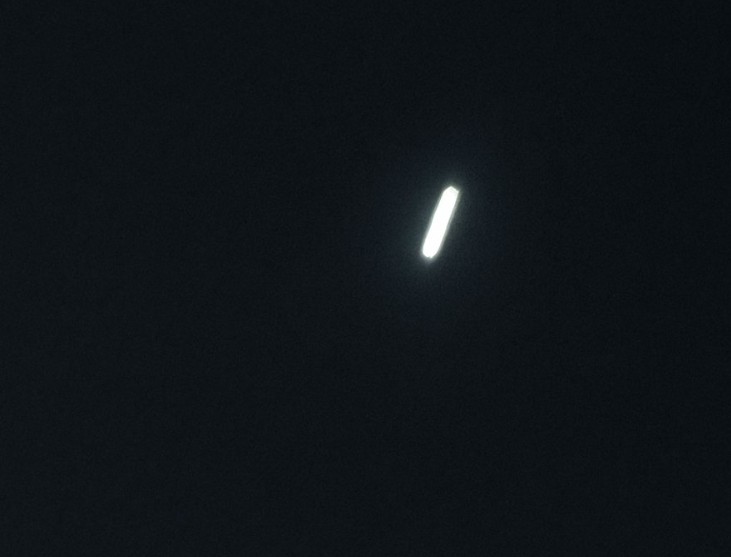
Interstellar Visitor 3I/ATLAS Baffles Astronomers with Unexpected Nickel Vapour Discovery
In a revelation that’s left the global astronomy community stunned, the interstellar comet 3I/ATLAS has been found emitting glowing nickel vapour, a phenomenon previously thought impossible at such frigid cosmic distances.
Using Chile’s Very Large Telescope (VLT), an international team of astronomers from Chile and the United States identified traces of nickel gas billowing from the comet’s atmosphere.
What makes this extraordinary is the sheer distance involved; 3I/ATLAS was almost four times farther from the Sun than Earth when the metal was detected.
At that range, temperatures plummet so low that metals simply shouldn’t vaporise. Yet, there it was, nickel gas, glowing faintly in the vast darkness.
The discovery challenges our basic understanding of how interstellar comets behave. Normally, such metals only appear when an object is heated intensely. Here, that rulebook doesn’t seem to apply.
Researchers explained, “The metal may be released from molecules that break apart when exposed to sunlight.”
This could mean sunlight alone, not heat, triggers the release. A subtle but revolutionary idea. It suggests that nickel atoms might emerge through chemical reactions involving carbon-based molecules or carbon monoxide, at temperatures much colder than we ever believed possible.
Adding to the intrigue, data from the James Webb Space Telescope (JWST) revealed that the comet’s halo contains far more carbon dioxide than water vapour.
That imbalance hints at a complex and ancient chemistry, conceivably forming in a firmed, distant part of another star system.
Billions of times agone, far from any sun, 3I/ ATLAS could have formed in conditions extensively different from our solar nursery.
The comet will make its closest pass by the Sun on October 29, and astronomers are watching it closely. They anticipate a swell in exertion as it warms, potentially exposing even more surprising rudiments or responses.
It’s a brief window. Once 3I/ATLAS slingshots past the Sun, it will continue its long, lonely voyage back into interstellar space—perhaps never to return.
This isn’t just another comet. It’s a messenger from another world, a tangible link to the chemistry and conditions that shape distant planetary systems.
By comparing 3I/ATLAS with earlier interstellar visitors like ‘Oumuamua and 2I/Borisov, scientists hope to decode whether the materials that form planets are universal or shaped by the unique quirks of each star system.
For now, 3I/ATLAS continues to streak silently through our skies, a cold, glittering reminder that the universe still holds secrets waiting to be unravelled.
Strangely, nickel vapour is more than just a scientific puzzle; it’s a hint that, across the galaxy, the rules of chemistry might be far more flexible than we ever imagined.