


The latest weather forecast has prompted urgent warnings from the Met Office, with heavy snow, ice and strong winds expected to affect large parts of the UK.
Forecasters have issued a rare “risk to life” alert as conditions worsen, particularly across Scotland, raising concerns over travel disruption, power cuts and increased health risks at the start of the new year.
The warning comes as the country braces for one of the coldest spells so far this winter, with temperatures staying well below the seasonal average and snow showers becoming more widespread.
Why Has the Met Office Issued a ‘Risk to Life’ Weather Warning?
The Met Office upgraded weather warnings in response to forecast snowfall totals and dangerous wind conditions.
Parts of the Scottish Highlands and north-east Scotland are now under an amber warning, meaning severe weather is likely and could cause significant disruption.
Forecasters say that prolonged heavy snow, combined with strong winds, could create blizzard conditions in exposed areas.
In higher ground, snow depths could reach as much as 40cm, increasing the risk of stranded vehicles, power outages and communities becoming cut off.
Met Office spokesperson: “This warning highlights the risk of disruptive snow showers and icy surfaces, particularly in northern and eastern areas, with impacts on travel and potential hazards for the public.”
Which Parts of the UK Are Expected to See the Worst Snowfall?
Scotland is expected to bear the brunt of the severe weather. Northern areas already under yellow snow and ice warnings could see between 2cm and 5cm of snow by Thursday evening, rising to 10cm by Friday morning.
Above 200 metres, accumulations of up to 20cm are forecast, with further heavy snow over the weekend extending warnings as far south as Perth and parts of Argyll and Bute.
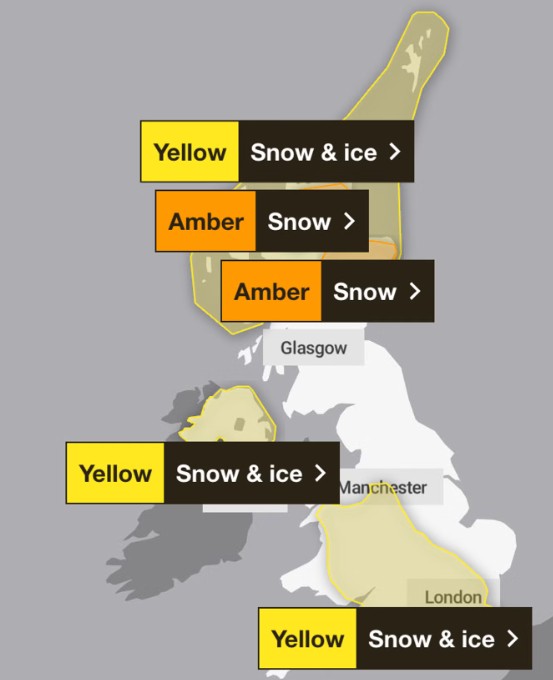
Elsewhere, much of England and Wales will see a wintry start to Friday. A yellow snow and ice warning stretches from Greater Manchester and North Wales down to London and Kent.
While lower-lying areas are likely to see lighter snowfall, higher ground could still be blanketed by up to 5cm of snow.
Northern Ireland is also affected, with icy conditions expected during the early hours of Friday, particularly on untreated roads and pavements.
How Cold Will It Get Across the UK?
The Met Office weather forecast shows daytime temperatures struggling to recover, even during the warmest part of the day. New Year’s Day highs are expected to remain low across all four nations.
| City | Expected High on New Year’s Day |
|---|---|
| Belfast | 5°C |
| London | 7°C |
| Manchester | 6°C |
| Edinburgh | 3°C |
| Cardiff | 8°C |
Night-time temperatures are expected to drop further, allowing ice to form quickly once snowfall clears, increasing the risk of accidents and travel delays.
Why Is the UK Health Security Agency Warning of Health Risks?
Alongside the Met Office alerts, the UK Health Security Agency (UKHSA) has raised the alert level across England due to the prolonged cold.
Amber cold health alerts are now in force in most regions until 10am on 6 January, signalling a high risk to vulnerable people.
Health officials warn that cold weather increases pressure on hospitals and social care services and is linked to a rise in deaths among older people and those with existing medical conditions.
Dr Paul Coleman, UKHSA: “Low temperatures like these can have serious impacts on health, particularly for older adults and those with heart or lung conditions. Cold exposure can increase the risk of heart attacks, strokes and chest infections.”
What Impact Could This Weather Have on Travel and Daily Life?
The Met Office has warned that road, rail and air travel could all be affected. Snow-covered roads, drifting snow and ice may lead to longer journey times and cancellations, while rural areas face the greatest risk of disruption.
Power cuts are also possible, especially where heavy snow accumulates on overhead lines. People are being urged to take extra care when walking outdoors, as icy pavements can develop rapidly after sleet or snow clears.
How Long Is the Cold Weather Expected to Last?
Forecasters say the cold spell is likely to continue through the weekend and into next week.
With temperatures remaining below average, further snow showers are possible, and the Met Office has warned that additional weather alerts may be issued at short notice.