
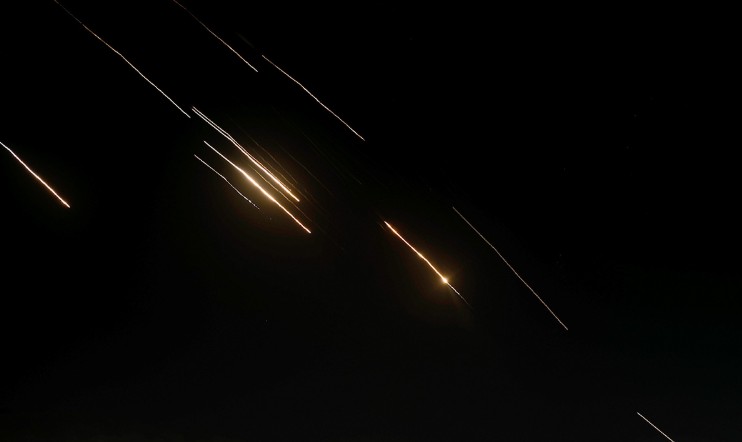
The United States has deployed advanced laser weapon systems to intercept Iranian missiles and drones as part of a major military campaign known as Operation Epic Fury.
The move comes amid escalating tensions in the Middle East, with the US military confirming that the technology is already being used at sea near Iran to stop incoming threats.
The development matters globally, including in the UK, because it highlights a major shift in modern warfare and missile defence technology.
What Is the US Laser System Being Used Against Iranian Missiles?
One of the key tools being used to stop Iranian missiles and drones is the High-Energy Laser with Integrated Optical Dazzler and Surveillance (HELIOS) system.
Mounted on a US Navy destroyer positioned near Iranian waters, HELIOS uses concentrated laser energy to destroy aerial targets before they reach their destination.
The US Central Command released footage showing the weapon firing a powerful beam capable of disabling drones mid-flight.
According to the US Navy, HELIOS successfully shot down four drones during February testing, demonstrating that directed-energy weapons are moving from experimental technology into active battlefield use.
How the HELIOS Laser Weapon Works?
| Feature | Explanation |
|---|---|
| Weapon Type | Directed-energy laser system |
| Platform | US Navy destroyers |
| Function | Detects and destroys drones or missiles |
| Energy Output | High-intensity focused laser beam |
| Advantages | Faster response, lower cost per shot compared with missiles |
Unlike traditional missile defence systems, which rely on expensive interceptors, a laser weapon fires concentrated energy. This allows near-instant engagement and significantly lower operational costs.
How Are Satellites Helping Track Iranian Missile Launches?
Another critical part of the operation involves space-based missile detection.
Satellites equipped with infrared sensors track the heat signatures produced when Iranian missiles launch, allowing defence systems to detect them almost instantly.
Several Iranian missiles evading Israeli-American areas, hitting Tel Aviv, Netanya, Tulkarem and other areas in Israel and Israeli occupied West Bank. #IranIsraelWar pic.twitter.com/yyb9vAqoTa
— @Misra_Amaresh (@misra_amaresh) March 5, 2026
These satellites feed data directly to military analysts who calculate the missile’s trajectory and determine the best interception point.
Brent David Ziarnick, a retired US Air Force officer and former Johns Hopkins University professor, explained how the system works.
“They can spot the missiles and pinpoint where the launchers are. The missiles can be intercepted and destroyed, often with Patriot missiles. Field forces get notified that an attack is coming, so they can go to shelters or bunkers.”
The system allows defence forces to react within seconds, significantly reducing the chances of missiles hitting their intended targets.
What Role Does the US Space Force Play in the Operation?
The US Space Force, created in 2019, has become a central player in countering Iranian missiles during Operation Epic Fury.
Rather than operating directly on the battlefield, many Space Force teams work from command facilities inside the United States. They analyse radar and satellite data inside specialised structures called radomes.
From there, analysts calculate:
- Missile launch locations
- Flight paths
- Interception timing
This information helps guide US and allied defence systems.
Ziarnick described the branch as: “A force to be reckoned with.”
How Effective Has the Campaign Against Iranian Missiles Been?
According to US military figures, the first 72 hours of fighting produced significant results.
Key Military Outcomes Reported
| Metric | Reported Figure |
|---|---|
| Targets struck across Iran | Around 1,700 |
| Ballistic missile launchers destroyed | More than 200 |
| Share of Iran’s launch capability | Roughly 50% |
| Additional launchers disabled | Dozens |
| Missiles destroyed before launch | Hundreds |
These figures suggest a heavy early impact on Iran’s missile infrastructure. However, independent verification of battlefield claims is often difficult during active conflicts.
How Did Cyber Warfare Target Iranian Defences?
Before physical strikes began, US forces reportedly launched cyber attacks against Iranian infrastructure.
US Cyber Command focused on disrupting communication networks and sensor systems used to track incoming threats.
General Dan Caine, Chairman of the Joint Chiefs of Staff, confirmed the goal of these digital operations. “Cyber operations targeted communications and sensor networks to disrupt, disorient, and confuse the enemy.”
This strategy allowed US forces to reduce Iranian defensive capabilities before launching physical strikes.
Experts say the coordination between space surveillance, cyber warfare, and laser weapons reflects a new model of modern conflict.
Why This Technology Matters for Future Missile Defence?
Military analysts increasingly see directed-energy weapons as a major breakthrough in defence technology.
Compared with conventional missiles, laser systems offer several advantages:
- Lower cost per engagement
- Near-instant targeting
- Unlimited ammunition (as long as power is available)
- Reduced risk of debris from intercept explosions
If successful in real-world operations, these systems could transform how militaries defend against ballistic missiles and drones.