


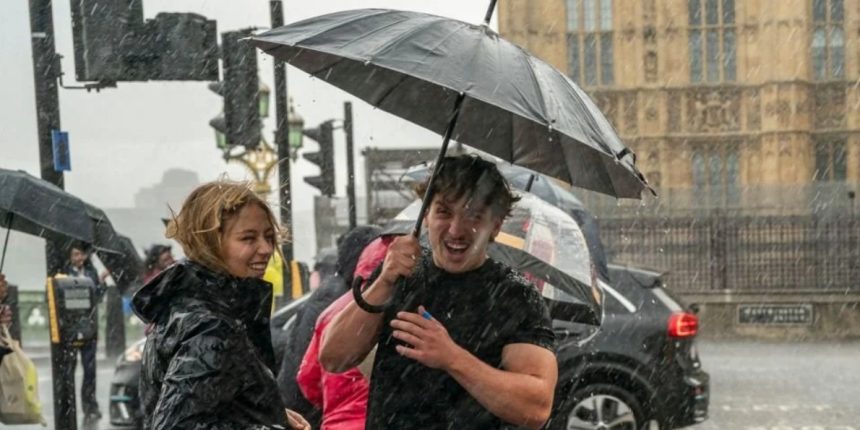
The United Kingdom is facing a dramatic meteorological U-turn this week as a potent polar maritime airmass sweeps away the recent unseasonal warmth.
After recording the warmest day of the year so far, reaching 20.9°C in Wales just days ago, forecasters at the Met Office have warned that temperatures will plummet by as much as 15°C by Wednesday.
This transition, driven by a strengthening jet stream, will bring a high-impact band of rain southeastwards across the country, followed by a cocktail of hail, thunder, and “thundersnow” in northern regions.
Why is the UK Weather Shifting So Suddenly?
The current weather event is the result of a “fractured” jet stream looping southwards across the Atlantic, allowing an Arctic maritime airflow to invade the British Isles.
For the first half of Tuesday, March 24, the UK remains divided. Southern England is clinging to cloudier, milder conditions, while a vigorous cold front is already carving its way through Scotland and Northern Ireland.
A windy start to Tuesday with rain moving across the north
Rain can be persistent and heavy at times and lead to some surface water issues in places
Drier further south but staying cloudy pic.twitter.com/dBSOVqGmGe
— Met Office (@metoffice) March 23, 2026
According to Met Office Deputy Chief Forecaster Steven Keates, Wednesday will be a “shock to the system.”
The front marks the end of the spring-like ridge of high pressure, replacing it with a sequence of low-pressure systems that are expected to bring more than 50-70mm of rain to the western hills before turning to snow.
These shifting conditions often mirror previous instances of 70mph gales and heavy rain that have historically disrupted the national infrastructure during the transition from winter to spring.
Rainfall and Wintry Hazards: Which Areas are at Highest Risk?
The weather system is moving in a distinct diagonal track from the northwest to the southeast.
Northern England and Wales
Heavy and persistent rain is the primary concern here. Areas such as the Pennines, Lake District, and Snowdonia (Eryri) are expected to see the heaviest totals.
Because the ground remains saturated from exceptionally wet conditions in February and early March, the Environment Agency has highlighted an elevated risk of surface water flooding and minor river rises.
Scotland and Northern Ireland
In the north, the rain will quickly transition to “blustery wintry showers.” The Met Office predicts that snow will fall on hills, but could reach lower levels in the Northern Isles and Caithness.
Forecasters have also noted the potential for thundersnow, a rare phenomenon where lightning occurs during a snowstorm, due to the highly unstable cold air following the front.
Southern and Eastern England
Regions including London, Hampshire, and East Anglia will remain largely dry but cloudy through much of Tuesday. However, the front is timed to hit the southeast during the early hours of Wednesday morning.
Residents should expect a wet commute, followed by a day where temperatures feel close to freezing due to a significant wind chill.
Transport and Infrastructure: Will the Weather Cause Travel Chaos?
The timing of this front coincides with ongoing pressure on the UK’s transport hubs.
- Aviation: London Heathrow and Gatwick have already faced “unprecedented disruption” this week due to wind-spacing adjustments and ATC staffing strains. The incoming gales in the north and heavy rain in the south are expected to cause further delays to domestic and short-haul European flights.
- Rail: LNER and Network Rail have advised passengers to check services between York and Newcastle, where the combination of weather and scheduled engineering works could extend journey times by up to 90 minutes.
- Roads: National Highways has warned of difficult driving conditions on the M62 and A9 due to spray and sudden drops in visibility during hail and snow showers.
Statements from the Met Office and the Environment Agency
Government agencies have moved to “alert” status to manage the transition: “The UK will turn increasingly unsettled… Wednesday could be quite a shock to the system.
Temperatures will range from 6°C to 10°C, but it will feel closer to low single figures for many in the wind.” Steven Keates, Met Office Deputy Chief Forecaster.
The Environment Agency continues to monitor sensitive catchments. While the Thames Barrier has been utilized recently to manage tidal risks, the focus now shifts to “flashy” river catchments in the west that respond quickly to the 20-30mm of rain forecast for Tuesday night.
The 48-Hour Impact: What Happens Next?
As the front clears the English Channel on Wednesday morning, the entire country will be in a cold, northerly flow.
- Wednesday Night: This is expected to be the coldest night of the week. Temperatures could drop to -5°C in rural parts of Scotland and the North York Moors, leading to a widespread frost.
- Thursday: A brief window of “crisp, blue-sky weather” is expected as a ridge of high pressure builds. However, icy patches on untreated roads will make the Thursday morning commute hazardous.
- Friday Outlook: The cold snap will be short-lived. By Friday, another Atlantic system will push in from the west, bringing milder temperatures but further spells of wind and rain.