


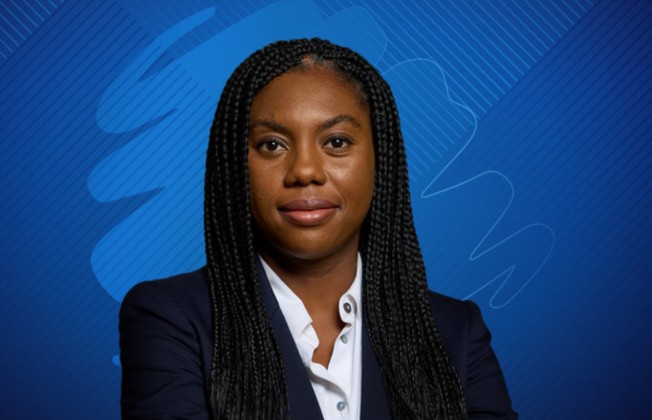
Conservative leader Kemi Badenoch has said the United States was “morally right” to carry out military action in Venezuela, even though she admits the legal basis for the operation is unclear.
Her comments have reopened a sensitive debate in UK politics about international law, moral responsibility, and Britain’s relationship with the US.
Speaking to the BBC, Badenoch described the removal of Venezuelan president Nicolás Maduro as a positive outcome, while warning that the way it was achieved raises serious concerns about the global rules-based order.
What did Kemi Badenoch say about the US action in Venezuela?
In a BBC interview, Kemi Badenoch said she was glad Nicolás Maduro was no longer in power, arguing that he presided over a harsh and repressive regime.
“He was overseeing a brutal regime, and I’m glad he’s gone,” Badenoch told the BBC, adding that the US action was “the right thing to do morally.
However, she was careful to distance herself from the legal justification for the operation, saying she did not understand the legal framework under which the US acted.
Why does the legal basis matter under international law?
Under international law, military intervention in another country is heavily restricted. It is normally considered lawful only if approved by the United Nations Security Council, carried out in self-defence, or supported by a clear international mandate.
In this case, no publicly confirmed UN authorisation has been cited. That absence is what has fuelled criticism across the UK political spectrum and prompted Badenoch’s warning that the action raises “serious questions” about the rules-based international system.
For the UK, which regularly relies on international law to criticise unlawful actions by states such as Russia, the issue is particularly sensitive.
How has the UK government responded so far?
The UK government has taken a cautious line. Rather than directly criticising Washington, ministers have repeated the long-standing position that Nicolás Maduro was an “illegitimate president”, following disputed elections and years of political repression.
By focusing on Maduro’s lack of legitimacy, the government has avoided saying whether it believes the US action breached international law.
This approach reflects an effort to maintain close ties with the US while avoiding explicit endorsement of military intervention without clear legal backing.
Why are opposition parties calling for condemnation?
Several opposition parties believe the government’s response does not go far enough. Labour MPs, along with the Liberal Democrats, the Green Party and the SNP, have urged ministers to formally condemn the US action and label it illegal.
Their argument is that selective silence undermines the UK’s credibility. If Britain expects international law to be respected elsewhere, critics say, it must apply the same standards to its allies.
Is this a familiar moral dilemma for UK foreign policy?
The tension between moral outcomes and legal process is not new. Supporters of the US move point to Venezuela’s severe human rights abuses, economic collapse, and political repression, arguing that removing Maduro prevents further suffering.
Critics counter that bypassing international law, even for moral reasons, sets a dangerous precedent.
They warn that weakening global legal norms ultimately makes the world less stable, particularly for smaller nations that depend on those protection rules.
Badenoch’s comments place her firmly on the moral side of this debate, while still acknowledging the risks involved.
How might the UK public view this stance?
British public opinion on military intervention has remained cautious since the Iraq War. While there is strong sympathy for people living under authoritarian regimes, there is also deep scepticism about overseas military action without clear legal justification.
For some voters, Badenoch’s remarks may signal moral clarity and decisiveness. For others, they may revive concerns about repeating past foreign policy mistakes.