


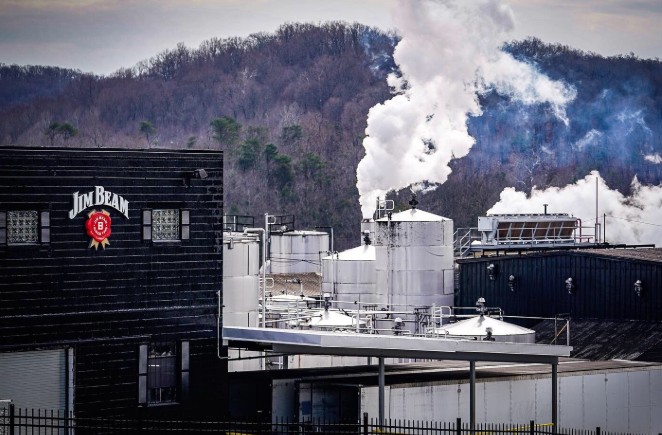
The maker of Jim Beam, one of the world’s best-known bourbon brands, has confirmed it will pause production at its main distillery in Kentucky for the whole of next year.
The decision has raised questions across the global drinks industry, including in the UK, where American bourbon remains a popular import.
Owned by Japanese drinks giant Suntory Global Spirits, Jim Beam says the move is part of a wider investment and planning strategy rather than a shutdown caused by falling sales alone.
Why is Jim Beam stopping production at its main distillery?
Jim Beam has confirmed that its flagship Kentucky distillery will halt production throughout 2026 to allow for major site upgrades and to better align output with demand.
In a statement shared with the BBC, the company said: “We are always assessing production levels to best meet consumer demand and recently met with our team to discuss our volumes for 2026.”
The firm added that the pause gives it the chance to invest in site enhancements, suggesting long-term planning rather than financial distress.
Despite the halt, other Jim Beam facilities in Kentucky, including bottling, warehousing, and a separate distillery, will continue operating.
Is this linked to overproduction of bourbon in the US?
Yes, industry data strongly suggests oversupply is a major factor.
According to the Kentucky Distillers’ Association (KDA), bourbon stockpiles reached a record 16 million barrels in warehouses across the state as of October last year. That is more than two barrels for every resident of Kentucky.
The KDA estimates that state barrel taxes alone cost distillers around $75 million (£56 million) in 2024, calling the financial burden “Crushing for producers during a period of slowing global demand.”
Much of the expansion over the past decade was aimed at export growth, particularly to Europe and Canada.
How have US trade policies affected Jim Beam and other distillers?
US bourbon producers have been hit by renewed trade tensions following tariff policies introduced under US President Donald Trump earlier this year.
After the so-called “Liberation Day” tariff announcement in April, several countries introduced retaliatory import taxes on American spirits.
The KDA warned: “Much of the expansion over the last decade has been geared towards global growth,” adding it hopes for “a speedy return to reciprocal, tariff-free trade.”
Canada, a major export market, has also had an impact. Earlier this year, most Canadian provinces boycotted American spirits, temporarily removing US bourbon brands from shelves.
What does this mean for Jim Beam workers in Kentucky?
Suntory Global Spirits employs more than 1,000 workers across its Kentucky operations.
Jim Beam says it is currently assessing how staff will be deployed during the production pause and is holding discussions with the workers’ union. No mass redundancies have been announced so far.
This mirrors previous pauses in the spirits industry, where workers were reassigned to maintenance, warehousing, or training roles during slowdowns.
Will UK consumers see shortages or price rises?
For now, UK drinkers are unlikely to see immediate shortages of Jim Beam.
With warehouses already holding record levels of bourbon, supply to the UK should remain steady in the short to medium term. However, continued trade tensions or further production pauses across the US could eventually affect pricing.
UK supermarkets currently sell standard bottles of Jim Beam bourbon for around £18–£22, depending on retailer and promotions.
Industry analysts suggest any long-term price changes would depend more on tariffs and exchange rates than on this single production pause.
What Are Bourbon Fans Saying About the Jim Beam Pause?
Major Kentucky bourbon maker Jim Beam shuttering distillery for 2026
Why does this matter to the UK drinks market?
American bourbon has seen strong growth in the UK over the past decade, particularly among younger drinkers and cocktail culture.
A prolonged slowdown in US production could:
- Push UK retailers to diversify into Irish or Japanese whiskies
- Increase interest in the smaller craft bourbon brands already stockpiled
- Highlight how global politics can affect everyday products on UK shelves