
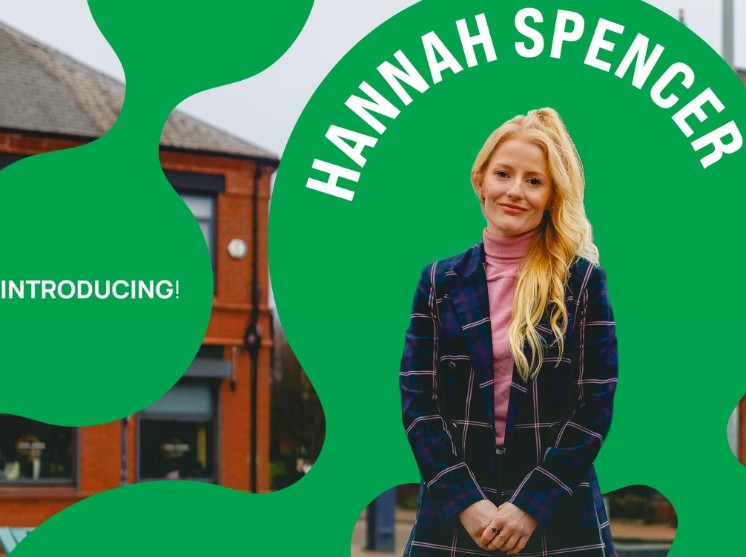
The Green Party has made political history after winning the Gorton and Denton Westminster by-election in Greater Manchester, marking the party’s first-ever by-election victory at Westminster.
Voters delivered the shock result overnight, pushing Labour into third place in what many inside the party are calling a nightmare scenario.
The result matters nationally because it exposes pressure on Sir Keir Starmer from both the Left and the Right, and raises fresh questions about Labour’s electoral strategy just months after its 2024 general election success.
At the 2024 general election, Labour secured more than 50% of the vote in the constituency with a majority of over 13,000. That dominance has now unravelled dramatically.
The scale of the upset echoes earlier warnings over a potential Keir Starmer by-election blow as smaller parties gain ground in traditional Labour heartlands.
How did the Green Party make history in this by-election?
The victory hands the Green Party its first by-election seat at Westminster, a landmark moment for a party that has long struggled to convert rising opinion poll support into parliamentary breakthroughs.
Party leader Zack Polanski appeared confident at the count, signalling that recent polling gains were not simply protest sentiment but could translate into real votes.
The party’s newly elected MP, Hannah Spencer, is expected to hold a victory rally later today.
🚨Green Party WIN The Gorton & Denton By-Election
🔴This seat was the 38th safest Labour seat in the entire country and has been Labour for the past 100 years
🚨Turnout was 47.62% and 36,903 votes cast
Hannah Spencer Green Party – 14,980
Matt Goodwin Reform Party – 10,578 pic.twitter.com/yfqfr3Vaxg— James Goddard (@JamesPGoddard90) February 27, 2026
In recent national opinion polls (late 2025 and early 2026), the Greens have polled between 8% and 12%, higher than their 2024 general election share. This result gives the polling surge tangible proof.
Why is this result so damaging for Labour?
For Labour, finishing third is more than symbolic. It confirms long-held fears inside the party that it could face an insurgency from the Left via the Greens while simultaneously battling Reform UK on the Right.
One Labour MP told reporters overnight: “Keir needs to own this. He’s out of chances. Everyone knew the only chance to beat both the Greens and Reform was Andy Burnham.”
The reference is to Andy Burnham, the Mayor of Greater Manchester, who some activists believe should have been selected as the candidate. His local profile, they argue, may have prevented Labour’s vote from splitting.
Deputy leader Lucy Powell left the count swiftly after the declaration, having given interviews earlier in the evening.
The defeat raises two immediate strategic questions for Sir Keir:
- Has Labour focused too heavily on fighting Reform UK?
- Has that strategy alienated progressive voters who now see the Green Party as the clearer left-wing choice?
Did Reform UK also play a role in splitting the vote?
Reform UK’s candidate, Matt Goodwin, criticised the Greens after the result, branding the party “mad” and arguing that it would struggle to repeat the success at a general election.
The broader right-wing vote remains fragmented, but Labour’s bigger issue may be leakage on its traditional flank.
Meanwhile, Nigel Farage claimed the contest was “a victory for sectarian voting and cheating”, allegations that have not been substantiated by local election officials.
What happened to the Conservatives?
The Conservatives suffered one of the most striking collapses of the night.
The party secured just 706 votes, representing 1.9% of the total vote share. For a party that governed the UK just two years ago, the figure highlights the continued fragmentation of British politics.
This by-election reinforces a broader trend in recent local elections: voters appear more willing than ever to switch between parties, particularly in urban areas.
Were there concerns about voting conduct?
The monitoring group Democracy Volunteers reported what it described as “concerningly high levels of family voting” in the constituency. The organisation defines this as situations where voters confer, collude or direct one another inside polling stations.
However, Manchester City Council stated that its polling station staff reported “no such issues” during the day.
Labour Party Chair Anna Turley told the BBC: “The reports are obviously extremely worrying and concerning.”
At this stage, no formal investigation outcome has been announced.
What does this Green Party win mean for UK politics?
This result confirms that UK politics is entering a more fragmented and competitive phase.
In 2024, Labour dominated this seat with over 50% of the vote. Within less than two years, voters have reshuffled the deck dramatically. That scale of movement signals volatility.
For the Green Party, the win provides:
- A morale boost
- Increased credibility in Parliament
- A platform for further constituency targeting
For Labour, it prompts internal reflection over candidate selection, messaging, and positioning between Reform UK and progressive voters.