

The FTSE 100 has officially entered a “market correction” this morning, with the UK’s blue-chip index falling more than 2% within hours of the opening bell.
This latest slide brings the total decline to a staggering 11% since the outbreak of the Iran war four weeks ago, marking the most volatile period for the London Stock Exchange since the 2022 energy crisis.
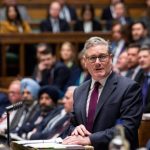
As the index slumped to 9,710 points, dipping below the critical 10,000-point threshold for the second time in three days, Prime Minister Sir Keir Starmer has summoned senior ministers and the Governor of the Bank of England for an emergency COBRA meeting.
The panic in the City follows a high-stakes ultimatum from US President Donald Trump, who has threatened to “obliterate” Iran’s power grid if the Strait of Hormuz, the world’s most vital oil artery, is not reopened by Tuesday midnight.
Why is the FTSE 100 Crashing?
In financial terms, a “correction” is defined as a 10% drop from a recent peak. At the end of February, the FTSE 100 was trading at an all-time high of 10,900 points, with analysts predicting a breach of the 11,000 mark.
However, the conflict in the Middle East has triggered a “flight to safety,” where investors dump equities in favour of gold and US dollars.
The current 11% drop-off has wiped out all gains made in 2026. While the FTSE 100 outperformed the US S&P 500 throughout 2025, it is now the worst-performing major Western index this month.
If the slide continues to 20%, the market will officially enter “Bear Market” territory, a scenario not seen since the early days of the pandemic.
The Trump Ultimatum: Will the US Strike Iranian Infrastructure?
The primary catalyst for Monday’s sell-off is a 48-hour deadline issued by President Trump via Truth Social.
🚨 “If Iran doesn’t FULLY OPEN, WITHOUT THREAT, the Strait of Hormuz, within 48 HOURS from this exact point in time, the United States of America will hit and obliterate their various POWER PLANTS, STARTING WITH THE BIGGEST ONE FIRST…” – President DONALD J. TRUMP pic.twitter.com/htLz1A0Mf7
— The White House (@WhiteHouse) March 22, 2026
The President warned that the US would target Iran’s “various POWER PLANTS, STARTING WITH THE BIGGEST ONE FIRST” unless tanker traffic resumes in the Persian Gulf.
The Strait of Hormuz is currently experiencing a 99% drop in tanker traffic due to Iranian retaliatory threats.
Tehran has responded to the US ultimatum by vowing to “irreversibly destroy” electrical and desalination plants across the Middle East that supply American military bases if their own grid is hit.
This “tit-for-tat” infrastructure war is what has sent Brent Crude soaring toward $114 a barrel, a price point that makes global inflation almost inescapable.
Starmer Chairs Emergency COBRA Meeting
In London, the atmosphere is one of controlled crisis. The Prime Minister’s COBRA meeting at 70 Whitehall includes:
- Rachel Reeves (Chancellor): Assessing the impact on UK borrowing costs, which have hit their highest level since 2008.
- Andrew Bailey (Governor of the Bank of England): Evaluating whether the 2% inflation target is still achievable or if interest rates must rise to 4.5% to combat the “war shock.”
- Ed Miliband (Energy Secretary): Reviewing the UK’s fuel reserves as Centrica (owner of British Gas) warns that global oil supplies are already down 20%.
While the government has stated there is “no need to ration fuel” yet, Housing Secretary Steve Reed did not rule out future shortages of food and petrol if the shipping blockade continues.
How Does This Affect the UK Public?
The market crash in the City of London has a “trickle-down” effect that will be felt by every household in the UK:
1. The ‘Pensions Trap’
Most UK private pensions are heavily weighted toward the FTSE 100. A 11% drop means that the average pension pot has lost thousands of pounds in paper value over the last 30 days. For those nearing retirement in 2026, this volatility is a significant blow.
2. The £2,000 Energy Bill Threat
Energy analysts at Cornwall Insight have revised their forecasts, suggesting the Ofgem energy price cap could rise to £1,973 by July—a £332 jump from current levels. This is driven entirely by the gas and oil price spikes caused by the closure of the Strait of Hormuz.
3. Food and Logistics
The UK’s major ports, including Southampton and Felixstowe, are seeing a surge in shipping insurance premiums. As transport costs rise, supermarkets are expected to pass these “war surcharges” on to consumers, potentially pushing food inflation back above 5% by the summer.
Is a UK Recession Inevitable?
Chris Beauchamp, Chief Analyst at IG, notes that the market is currently “pricing in a global recession.”
“Investors who spent the weekend watching fresh strikes are in no mood to hang around. Each day the war continues drives inflation higher, with recession chances rising by the hour.”
The International Energy Agency (IEA) has compared the current situation to the “twin oil shocks of the 1970s.” With the UK already struggling with high borrowing costs, a sustained oil price above $110 could force the economy into a technical recession (two consecutive quarters of negative growth) before the year is out.
What Happens Next?
The next 36 hours are critical for the UK economy:
- Tuesday, 23:44 GMT: The expiry of Trump’s 48-hour deadline. Any military action at this point could send the FTSE 100 toward the 9,000-point level.
- Wednesday Morning: The London Market Open will react to any overnight escalations in the Gulf.
- Thursday: The Bank of England’s scheduled briefing on market stability.