
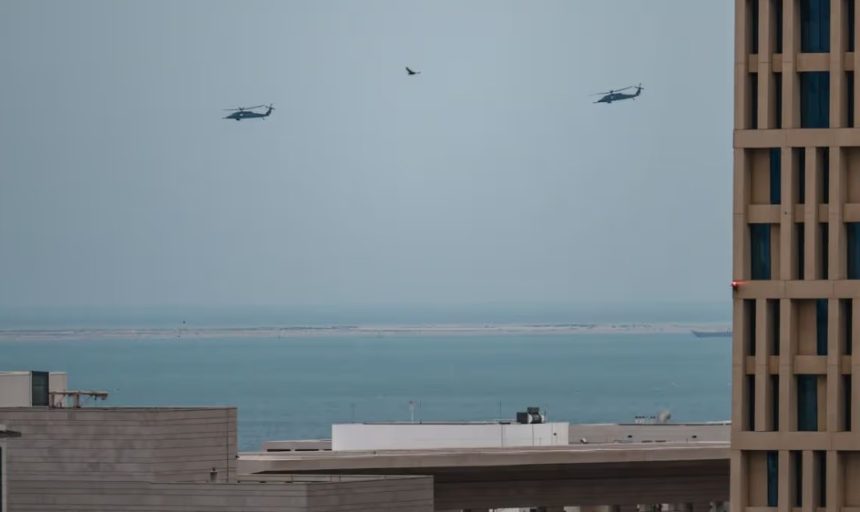
Explosions in Doha, Qatar, have been reported after the country’s defence ministry confirmed a missile attack targeting the Gulf state, prompting emergency alerts across the capital.
Authorities urged residents to stay indoors and away from windows as security forces assessed the situation.
The incident occurred on Thursday morning in Doha, with officials linking the attack to rising tensions involving Iran and US military facilities in the region.
The situation matters globally because Qatar hosts a major US military base and plays a key role in Middle East security and energy supply chains, both of which affect international markets, including the UK.
What happened during the explosions in Doha, Qatar?
Residents across Doha reported loud explosions early Thursday morning, shortly after emergency alerts were sent to mobile phones through Qatar’s national alert system.
The warnings told people to remain calm, stay at home, and avoid windows while authorities handled the threat.
Qatar’s Ministry of Defence confirmed that the sounds were linked to incoming missiles targeting locations in the country, though officials did not immediately confirm whether the missiles struck any major infrastructure.
BREAKING 🚨
Multiple explosions reported over Doha, Qatar as heavy air defence activity lights up the skies.
Smoke seen rising from the Al Udeid Airbase. pic.twitter.com/M2lCFysdFG
— The Bharat News 🇮🇳 (@BharatNewsX) March 5, 2026
Government messages described the situation as an “elevated security threat”, urging the public to rely only on official information.
Why is Iran linked to the missile attack?
The explosions in Doha come amid rapidly escalating tensions between Iran and US military forces in the Gulf region.
Earlier this week, a missile struck the US Al Udeid Air Base, the largest American military installation in the Middle East, located just outside Doha. The base hosts thousands of US troops and plays a major role in regional air operations.
Following that incident, Qatar’s foreign minister reportedly held a tense phone call with Iran’s foreign minister, warning that Iran was “dragging Gulf neighbours into a war that is not theirs.”
While officials have not yet publicly confirmed who launched Thursday’s missiles, Iran has previously carried out missile strikes in response to regional military tensions.
What damage and injuries have been reported?
Authorities confirmed that previous missile barrages already caused injuries in Qatar last week.
According to Brigadier Abdullah Khalifa Al-Muftah, head of public relations at Qatar’s Ministry of Interior, “Sixty-six missiles were launched at Qatar, and authorities received 114 reports of shrapnel falling across the country.”
Officials said 16 people were injured when fragments from intercepted missiles landed in several locations. One person suffered serious injuries.
Air defence systems reportedly intercepted many incoming missiles, which prevented more severe damage but led to dangerous debris falling across populated areas.
| Incident | Key Figures |
|---|---|
| Missiles launched toward Qatar | 66 |
| Reports of falling shrapnel | 114 |
| People injured | 16 |
| Serious injuries | 1 confirmed |
How are authorities responding in Doha?
Qatar’s emergency services moved quickly after the explosions were reported. Officials issued nationwide alerts, advising residents to:
- Stay indoors
- Avoid windows and balconies
- Monitor official government updates
- Avoid unnecessary travel
Security forces also tightened protection around strategic locations, including airports, government buildings and foreign military facilities.
The government emphasised that public safety measures were precautionary, designed to minimise risk from missile debris or further strikes.
Why does the situation matter internationally?
The explosions in Doha have global implications, particularly for energy markets and international security.
Qatar is one of the world’s largest exporters of liquefied natural gas (LNG), supplying energy to Europe, including the UK. Any escalation in Gulf tensions could disrupt shipping routes through the Strait of Hormuz, a vital energy corridor.
The country also hosts Al Udeid Air Base, which supports US and allied operations across the Middle East.
If attacks continue, analysts warn that the conflict could pull more regional countries into a broader confrontation, potentially affecting global oil and gas prices.