

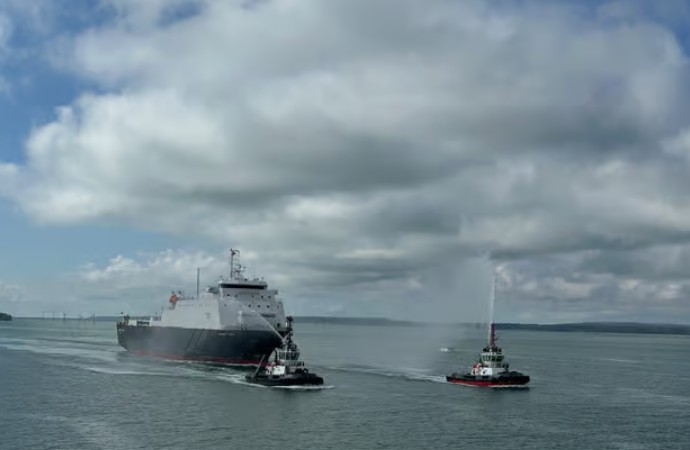
A DFDS cargo ship is due to be towed into Portsmouth after a fire broke out in its engine room while it was off the Isle of Wight on Monday afternoon.
The incident involved the Caesarea Trader, a freight vessel travelling between Jersey and Portsmouth, with the fire first reported to HM Coastguard at around 15:45 GMT.
Emergency teams were deployed quickly, and authorities later confirmed that all 24 people on board were safe and accounted for.
The DFDS Caesarea trader fire is now raising concerns about disruption to freight deliveries between the UK mainland and the Channel Islands, a route many local businesses rely on for daily supplies.
What happened during the DFDS Caesarea Trader fire?
The blaze was reported to have started in the ship’s engine room while the vessel was in waters off the Isle of Wight, close to Shanklin. After the alarm was raised, the ship anchored east of the island as emergency services monitored the situation.
By later that evening, officials described the incident as stable. The Maritime and Coastguard Agency said that by around 22:00, the situation on board had calmed, and all crew members remained safe.
Engine room fires are treated as high risk at sea because they can spread rapidly through fuel systems, wiring and ventilation spaces.
Although the full cause has not yet been confirmed, early reports suggest crews acted quickly to prevent the blaze from escalating.
How did HM Coastguard and the RNLI respond?
HM Coastguard sent a search and rescue helicopter to carry out thermal imaging, helping crews identify heat spots and check whether the fire had spread beyond the engine area.
The Bembridge RNLI lifeboat also attended the scene as a precaution, while tug support was dispatched from Portsmouth to assist with stabilising and securing the vessel.
Emergency responders remained on standby for several hours, but later stood down some units once the situation appeared under control. The coordinated response helped ensure the ship stayed safe at anchor while preparations were made to bring it into harbour.
Why is the Caesarea Trader being towed into Portsmouth?
The Caesarea Trader is expected to be towed into Portsmouth so specialist crews can fully inspect the vessel and ensure no further risk remains.
Firefighters from Hampshire & Isle of Wight Fire and Rescue Service will take over the incident once the ship reaches port.
Authorities will likely focus on assessing the extent of damage in the engine room, checking whether any structural areas were affected, and confirming that all mechanical systems are safe before the vessel can return to service.
Towing a damaged vessel is a standard safety measure, especially when the fire involves critical machinery such as engines, electrical systems or fuel lines.
Were there injuries or evacuations on board?
No injuries have been reported, and officials confirmed all 24 people aboard were safe. The fact that everyone was accounted for suggests the crew managed the incident calmly and effectively, following established emergency procedures.
While fire incidents at sea often carry the risk of evacuation, the situation did not appear to reach that stage. Authorities described the vessel as stable later in the evening, which reduced the need for further emergency escalation.
Why does this fire matter to Jersey and UK freight services?
The DFDS Caesarea trader fire matters because the ship supports an important freight link between Portsmouth and Jersey, a route that helps keep goods moving to the island.
Freight services like this carry a wide range of essential supplies, from supermarket stock and household items to construction materials and business deliveries.
Jersey relies heavily on maritime transport, meaning even a short delay can affect supply schedules and create knock-on disruption for retailers and local firms.
DFDS has said it is taking steps to maintain freight continuity to Jersey, but any extended downtime for the vessel could put pressure on alternative shipping arrangements.
What is the Caesarea Trader and why is it significant?
The Caesarea Trader is a well-known ship in Channel Islands freight operations. It previously operated under the name Commodore Goodwill, serving the route for nearly 30 years before DFDS acquired the vessel in 2025.
DFDS later renamed it Caesarea Trader as a nod to Jersey’s Latin name, Caesarea, reflecting the ship’s long connection with the island.
Over time, the vessel has become a familiar part of the freight network that supports day-to-day life and commerce between the Channel Islands and the UK mainland.
Could this lead to delivery delays or supply disruption?
Some delays remain possible, depending on how long inspections and repairs take once the ship arrives in Portsmouth.
Freight services are often tightly scheduled, and removing one major vessel from operation can cause disruption, especially if demand remains high.
However, major operators typically prepare contingency plans for incidents like this, including rerouting cargo or using alternative vessels. If DFDS can quickly reorganise freight capacity, disruption may remain limited.
For businesses in Jersey, the biggest concern will be whether any long-term repairs keep the vessel out of service for weeks rather than days.
What happens next in the investigation?
Once the ship reaches Portsmouth, engineers and fire specialists will likely inspect the engine room in detail to identify what triggered the blaze. Investigators will also examine whether onboard fire suppression systems worked properly and whether the vessel can return to service safely.
Authorities have not yet confirmed whether a formal maritime investigation will follow, but engine room fires often prompt deeper reviews due to their potential severity.