


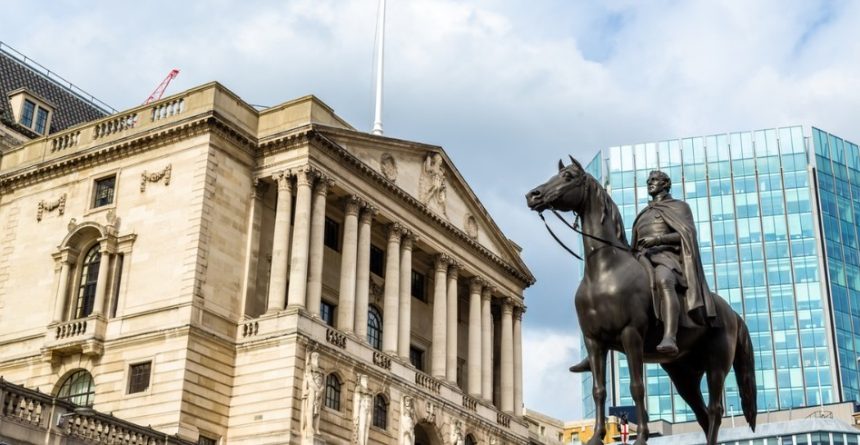
In a decisive move that has sent shockwaves through the City of London, the Bank of England has unanimously voted to hold interest rates at 3.75%.
The decision, announced on Thursday by the Monetary Policy Committee (MPC), marks a sudden departure from the cycle of rate cuts seen throughout 2025 and serves as a stark reminder of how global geopolitics can derail domestic financial stability.
Just weeks ago, economists were betting on a further reduction to stimulate a “flatlining” British economy. However, the escalation of conflict in the Middle East, specifically the impact of US military strikes in Iran, has triggered a surge in global energy prices.
This phenomenon, increasingly labeled “Trump-flation” by Westminster insiders, has forced Governor Andrew Bailey and his team to prioritize the fight against rising inflation over the immediate need for growth.
Why did the Bank of England stop cutting interest rates?
The primary catalyst for the 9-0 unanimous vote was the “new shock” delivered to the global economy by the hostilities in Iran. Before the US-led strikes, the UK was on a steady path of disinflation.
However, the sudden spike in oil and gas prices has fundamentally altered the outlook for CPI inflation.
The MPC warned in its meeting minutes that higher energy costs will inevitably filter down to UK households via fuel and utility bills.
By holding the base rate at 3.75%, the Bank is attempting to anchor inflation expectations, preventing a repeat of the double-digit price hikes seen in previous years.
The Monetary Policy Committee voted unanimously to keep Bank Rate at 3.75%.
Read the full report here.— Bank of England (@bankofengland)
March 19, 2026
The message from Threadneedle Street is clear: the path to the 2% inflation target is now significantly more treacherous.
How does the Middle East conflict specifically affect UK energy bills?
The UK remains highly sensitive to global commodity markets. As the war in Iran threatens supply routes in the Middle East, the “imported inflation” from oil and gas creates a ripple effect.
- Petrol and Diesel: Prices at UK forecourts in cities like Bristol, Glasgow, and Manchester have already seen a 5p-per-litre uptick in the last seven days.
- Utility Caps: While the Ofgem price cap is adjusted periodically, the wholesale surge suggests that the next revision will likely see bills rise rather than fall, putting further pressure on the “Cost of Living” crisis.
- Business Logistics: UK haulage firms and supermarkets are facing higher transport costs, which experts fear will lead to “shrinkflation” or direct price increases on supermarket shelves.
What is ‘Trump-flation’ and why are UK politicians worried?
The term “Trump-flation” has gained traction in the House of Commons this week, used by Liberal Democrat treasury spokesperson Daisy Cooper to describe the inflationary consequences of the US President’s military decisions.
The political fallout has been immediate:
- The Government’s Dilemma: For Chancellor Rachel Reeves, the pause is a blow to the “Growth Mission.” Higher rates mean higher borrowing costs for the government, limiting the fiscal space for public services.
- The Opposition’s Critique: Shadow Chancellor Sir Mel Stride accused Labour of leaving the UK economy “vulnerable to external shocks,” claiming that high taxes and “reckless spending” have left the country with the highest inflation in the G7.
Is this the end of the mortgage price war?
For the millions of homeowners in the UK, the news is a cold shower. In anticipation of this hold, several major high-street lenders, including Lloyds, Barclays, and NatWest, have already pulled their lowest-priced fixed-rate deals.
This caution from lenders stems from a cooling broader economy; recent data shows UK unemployment hits 5.2% while wage growth has simultaneously dipped to 3.8%, complicating the Bank’s decision-making process.
- Tracker and Variable Rates: Approximately 600,000 households on tracker mortgages will see no change in their monthly payments, missing out on the £25-£50 monthly saving they had expected from a 0.25% cut.
- First-Time Buyers: In competitive markets like London, Birmingham, and Leeds, the cost of entering the ladder remains stubbornly high. The “wait-and-see” approach from the Bank suggests that sub-3.5% mortgage deals may not return until the final quarter of 2026.
- The £800 Hit: Daisy Cooper warned that the failure to lower rates could effectively cost some households an extra £800 a year in interest compared to previous forecasts.
Why are Savers the only winners?
While borrowers suffer, the “ISA Season, the period leading up to the end of the tax year on April 5th, is looking more lucrative for savers”.
With the base rate held at 3.75%, banks are forced to compete for deposits. This is particularly relevant for:
- Pensioners: Those relying on interest income from savings accounts will benefit from the prolonged period of higher yields.
- Cash ISAs: Experts at Scottish Friendly suggest that now is the time to lock in fixed-term ISA rates before the Bank eventually resumes its cutting cycle later this year.
Official Data: The State of the UK Economy in March 2026
| Metric | Current Status | Impact of the Iran Conflict |
| Bank Base Rate | 3.75% | Held (Unanimous) |
| CPI Inflation | 3.1% | Forecasted to rise to 3.5% |
| Average 2-Year Fix | 4.65% | Rising slightly |
| Goldman Sachs Forecast | 3.00% by Dec | Delayed until Q4 |
What happens next?
The City remains cautiously optimistic that this is a “pause” rather than a “pivot” back to rate hikes. Philip Shaw at Investec noted that for rates to fall again, we need to see evidence that the Iranian conflict is contained and energy prices are retreating.
- The April MPC Meeting: Most analysts expect another “hold” as the Bank gathers more data on how the energy shock is affecting domestic wages.
- The Summer Outlook: If a diplomatic solution is reached in the Middle East, the Bank may resume cutting in June or August, with a target of reaching 3% by the end of the year.
- The Upside Risk: If oil prices hit $120 a barrel, the Bank may be forced to consider an interest rate increase, a scenario that would be catastrophic for the UK’s delicate housing market.
FAQ
Will interest rates go up again in 2026?
While the current move is a “hold,” economists like Peter Goves at MFS Investment Management believe a hike is unlikely because it would crush consumer demand too severely. However, if inflation spikes significantly above 4% due to energy costs, a hike cannot be ruled out.
How does the 3.75% rate compare to historical averages?
While 3.75% feels high compared to the “near-zero” era of the 2010s, it is actually closer to the long-term historical average for the UK. The shock comes from the speed at which rates rose from 2022 to 2024.
When will the next mortgage rate drop happen?
Most City analysts, including those at Goldman Sachs, don’t expect another significant drop in mortgage pricing until the summer, and even then, it depends on a de-escalation of the war in Iran.
Is the 2% inflation target still realistic?
The Bank of England is legally mandated to hit 2%. While the Iran conflict makes this harder, the Bank believes that as long as domestic wage growth remains cool, it can reach the target once global energy prices stabilize.