


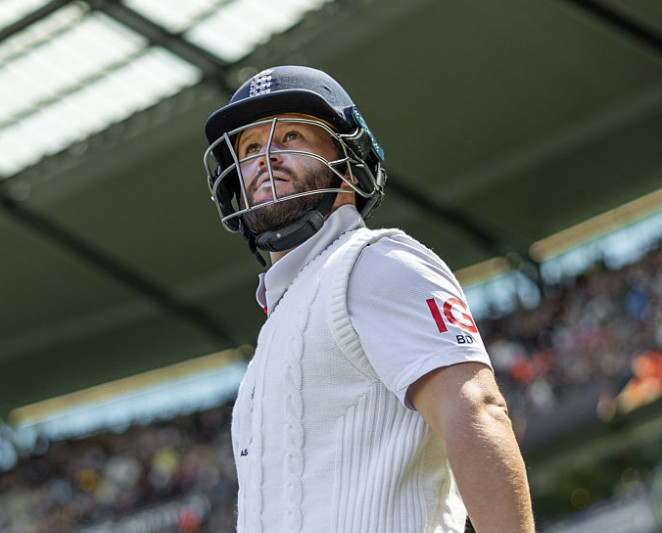
England’s Ashes troubles at the top of the order resurfaced yet again in the 4th Ashes Test, with Ben Duckett falling cheaply for just 2 runs, leaving England on the back foot inside the opening exchanges.
For a UK audience hoping for stability and momentum, it was a frustratingly familiar sight.
Australia’s fast bowlers struck early once more, reinforcing a growing concern that England’s opening partnership simply is not firing when it matters most.
What happened to Ben Duckett in the 4th Ashes Test?
England’s innings began nervously, and it did not take long for Australia to make a breakthrough.
Ben Duckett edged Mitchell Starc to mid-on after just 3 overs, attempting a tentative clip at a full, fast delivery that shaped away late. The ball flew off the leading edge, and Michael Neser completed a straightforward catch.
England were 8/1 after 3 overs, once again chasing the game almost immediately. It echoed earlier moments in the series when England had to rebuild after sharp new-ball spells, including occasions where they managed brief resistance after early damage, as seen when England recovered from early Starc strikes in the second Ashes Test.
Ben Duckett giving a late Christmas present. #TheAshes https://t.co/yCUyunIDzo
— Stephen Clark (@ClarkHistoryPol) December 26, 2025
This dismissal continued a pattern that has plagued England throughout the Ashes series, losing wickets far too early and allowing Australia to dictate terms.
How bad are England’s opening partnership numbers in this Ashes series?
The figures paint a worrying picture for England fans.
England Openers – Ashes Series So Far
| Stat | Figure |
|---|---|
| Average opening stand | 14.42 runs |
| Average overs before the first wicket | 3.1 overs |
| Innings with wicket lost inside 3 overs | 5 out of 7 |
| Times Ben Duckett dismissed in single figures | Multiple innings |
These numbers underline just how little time England’s middle order has had to settle, repeatedly walking in with the score barely moving.
Why does Ben Duckett’s dismissal matter so much?
Ben Duckett has been backed heavily as part of England’s aggressive “Bazball” approach. His role is to score quickly and put bowlers under pressure.
However, against Australia’s high-quality pace attack, that aggression has often turned into vulnerability.
Former England captain Michael Vaughan, speaking on BBC Test Match Special, summed up the concern clearly: “England cannot keep losing wickets inside the first four overs. It puts huge strain on everyone else and hands momentum straight to Australia.”
Duckett’s early dismissal meant England were once again chasing stability instead of setting the tone.
Is Australia targeting England’s openers deliberately?
Australia’s tactics appear clear and well-executed. Mitchell Starc, Pat Cummins, and Josh Hazlewood have consistently bowled full and fast with movement, forcing England’s openers to play early shots.
An analyst noted during live coverage: “Australia knows England wants to be positive. They’re tempting the drive, and the clip early, and England keep falling into the trap.”
This tactical clarity has paid dividends, with Australia striking early in nearly every innings.
How does this compare to previous Ashes series?
Historically, successful England Ashes sides have relied on solid starts.
- In the 2010–11 Ashes, England’s opening partnerships regularly passed 40–50 runs
- In the 2015 home Ashes, early wickets were far less frequent
- In this series, England are barely reaching double figures consistently
The contrast highlights just how damaging these early losses have been.
What options does England have moving forward?
England’s coaching staff faces difficult decisions:
- Persist with Ben Duckett and back the aggressive approach
- Change the opening combination to seek stability
- Adjust tactics, asking openers to absorb pressure rather than attack immediately
So far, England have shown no sign of abandoning their philosophy, but results are increasingly testing that commitment.