

The British government’s efforts to secure a landmark successor to the current maritime security agreement with France have reached a critical impasse.
Negotiations for a proposed £650m UK-France Channel deal, intended to span the next three years, have reportedly hit a standstill just hours before the existing funding arrangement is set to expire at midnight on Tuesday.
At the heart of the deadlock is a high-stakes disagreement over “payment by results.” Home Secretary Shabana Mahmood is understood to be pushing for rigorous new conditions that would see UK taxpayer funds released only when French authorities meet specific interception benchmarks.
Why has the £650m Agreement Reached a Deadlock?
The proposed deal represents a significant financial escalation from the previous 2023–2026 agreement. The UK has offered approximately £650 million over a three-year cycle (2026–2029) to bolster French beach patrols, surveillance technology, and law enforcement.
However, sources close to the negotiations indicate that the UK Home Office is no longer willing to provide “blank cheque” support. Recent figures have emboldened British negotiators to take a harder line:
- Interception Rates: Current data shows French teams are intercepting approximately 33% of crossing attempts.
- The Gap: Home Office figures reveal that recently, only 2,064 out of 6,233 attempted crossings were successfully stopped by French gendarmes.
The French government, led by General Secretary for the Sea Xavier Ducept, has reacted sharply to these demands.
Paris argues that linking financial aid to a numerical “efficiency rate” is not only a slight against French sovereignty but also creates a “dangerous incentive” for officers to take risks at sea that could lead to further loss of life in the Channel.
Which UK and French Locations are Most Affected?
The impact of these stalled talks is felt most acutely along the Kent coastline, specifically in Dover, Folkestone, and Ramsgate. These areas serve as the primary processing hubs for arrivals.
On the French side, the tension is centered in Dunkirk and Calais. A major sticking point in the talks is the delayed migrant detention centre in Dunkirk.
While the UK agreed to fund the facility in 2023, planning disputes in France have stalled its completion. British negotiators are now reportedly demanding the centre be operational this year as a non-negotiable condition of the new £650m package.
What are the Official Stances from London and Paris?
The rhetoric from both sides of the Channel highlights a widening diplomatic rift as the deadline looms.
The French Perspective: Xavier Ducept told a French parliamentary committee, “They must not make this funding conditional on a type of efficiency that could be extremely dangerous for migrants.
Monitoring 150km of coastline is a massive operational challenge that cannot be reduced to a simple percentage.”
The UK Home Office: A spokesperson for the Home Office maintained a firm public stance: “France is our most important migration partner. We have prevented over 40,000 crossing attempts since this government took office.
Our landmark deal means illegal migrants who arrive on small boats are being sent back to France under the ‘one-in, one-out’ pilot.”
Despite these public reassurances, insiders suggest that Shabana Mahmood is under intense pressure to demonstrate “value for money” as the number of arrivals in 2025 reached approximately 41,472—a 13% increase on the previous year.
How Does the Standoff Impact the British Public?
The stalling of the UK-France Channel deal has direct consequences for UK infrastructure and public services:
| Affected Sector | Impact Description |
| Public Finances | The £650m price tag represents a significant portion of the Home Office’s border budget, leading to calls for stricter auditing. |
| Local Communities | Towns like Dover and Folkestone face continued pressure on local services and temporary accommodation facilities. |
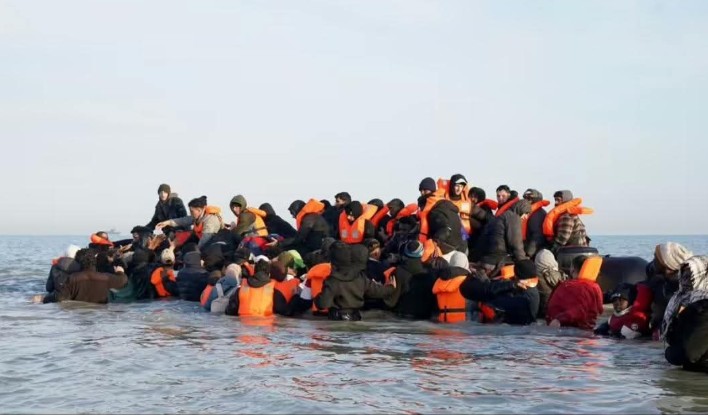
| Border Security | Officials warn that without a deal, the “taxi boat” method, where larger inflatables are launched from further out, will become harder to combat. |
| Transport Hubs | Increased activity in the Channel often leads to heightened security at the Port of Dover and Eurotunnel, occasionally causing freight delays. |
What is the ‘One-In, One-Out’ Pilot and is it Working?
A crucial element of the future relationship is the “one-in, one-out” migrant returns deal established between Sir Keir Starmer and Emmanuel Macron.
As of early 2026, the pilot has produced the following results:
- Returns to France: 377 migrants successfully returned.
- Transfers to the UK: 380 asylum seekers transferred via legal routes.
British negotiators view the expansion of this scheme as a priority, but the French remain hesitant to scale it up without the guaranteed £650m investment.
British officials also rejected French requests to pay the salaries of staff at the Dunkirk detention centre, insisting that UK funds should remain focused on frontline interception technology and equipment.
What Happens Next if No Deal is Signed?
As the midnight deadline approaches, all eyes are on whether a “stop-gap” extension will be signed.
If no deal is reached:
- Patrol Funding Gap: France may reduce the number of officers on the beaches if the UK stops covering personnel costs.
- Diplomatic Friction: The “special relationship” on migration could chill, affecting intelligence sharing on people-smuggling gangs.
- Increased Crossing Attempts: Border Force officials fear that gangs will exploit the period of uncertainty to launch a record number of boats during favorable weather windows.