

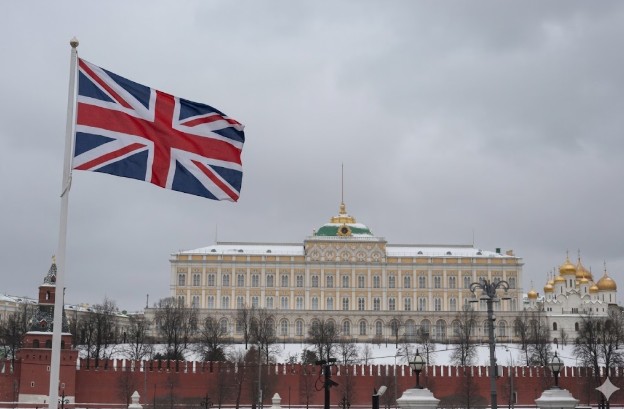
The diplomatic chasm between London and Moscow has widened significantly following the summary expulsion of a British diplomat from the Russian capital.
On Monday, 30 March 2026, the Russian Federal Security Service (FSB) announced it had revoked the accreditation of a second secretary at the British Embassy in Moscow, ordering them to leave the federation within 14 days.
This move is not merely a localized diplomatic spat; it is a calculated response to the United Kingdom’s increasingly aggressive stance against Russia’s “grey zone” maritime activities.
With Prime Minister Sir Keir Starmer recently authorizing British commandos to board and intercept the Kremlin’s “shadow fleet” in UK waters, the spying allegations serve as the latest volley in a high-stakes geopolitical game that threatens to disrupt European energy security and international law.
What Exactly are the FSB’s Spying Allegations Against the UK?
The FSB, the primary successor to the Soviet-era KGB, has accused the unnamed British diplomat of engaging in “intelligence and subversive activities” that allegedly threaten the national security of the Russian Federation.
According to reports from Russian state media, the diplomat is accused of using “informal meetings” to harvest sensitive economic data.
The core of the allegations includes:
- Economic Espionage: Claims that the diplomat sought non-public information regarding how Russia is circumventing G7 energy sanctions.
- Document Falsification: The FSB alleged the official provided “false information about himself” upon his initial accreditation—a classic charge often used to delegitimize foreign diplomatic staff.
- Undeclared Intelligence Presence: The Kremlin asserts the diplomat was an undercover intelligence officer operating under a diplomatic “cover” to coordinate with Russian opposition or economic analysts.
The UK Foreign, Commonwealth & Development Office (FCDO) has categorically denied these claims, labeling them as “baseless” and “politically motivated.”
Why is the ‘Shadow Fleet’ the Real Catalyst for This Expulsion?
To understand the timing of these spying allegations, one must look at the English Channel. Just days before the expulsion, Sir Keir Starmer announced a landmark shift in UK maritime policy.
For the first time, British commandos and the Royal Navy have been empowered to board, halt, and inspect vessels belonging to Russia’s “shadow fleet” as they transit through UK territorial waters.
What is the Shadow Fleet?
The shadow fleet consists of over 1,000 ageing, poorly maintained, and often uninsured tankers. These vessels:
- Evade Sanctions: They transport Russian oil to global markets, bypassing the price caps imposed by the West since the invasion of Ukraine.
- Fly Flags of Convenience: They often operate under the flags of countries like Panama or Liberia to avoid direct scrutiny.
- Risk Environmental Catastrophe: Due to their age and lack of insurance, a spill in the North Sea or English Channel would leave UK taxpayers with a multi-billion-pound cleanup bill.
By targeting these ships, the UK is striking at the heart of the Kremlin’s war chest. Moscow’s decision to expel a diplomat is a standard “tit-for-tat” response designed to show that any pressure on their economic lifelines will be met with diplomatic hostility.
Where Did the Friction Occur?
While the expulsion took place in Moscow, the ripples of this event are centered on several key UK locations and strategic hubs:
- Whitehall, London: The FCDO and Ministry of Defence (MoD) are currently coordinating a “proportionate response.”
- The English Channel: Increased Royal Navy patrols near Dover and the Strait of Gibraltar are expected as the UK begins its boarding operations.
- UK Energy Hubs: Ports such as Aberdeen and Immingham are on high alert for potential Russian maritime provocations or cyber-retaliation.
- The British Embassy, Moscow: Located on Smolenskaya Embankment, the embassy is now operating with a “skeleton crew,” severely limiting its ability to assist British nationals still in Russia.
How Will the UK Government Respond to the Diplomatic Blow?
The UK’s strategy following spying allegations usually follows a strictly defined “escalation ladder.” In the coming days, we can expect:
1. The Reciprocal Expulsion
The UK is almost certain to expel a senior Russian intelligence officer currently stationed at the Russian Embassy in Kensington, London. This maintains the “balance of power” in diplomatic numbers.
2. Enhanced Maritime Interdiction
Rather than backing down, the Starmer administration is likely to fast-track the deployment of Royal Marine boarding teams. By physically stopping tankers, the UK demonstrates that diplomatic expulsions in Moscow will not change British policy at sea.
3. Diplomatic Isolation
The UK will likely lobby European allies, particularly those in the Joint Expeditionary Force (JEF), including Norway, Denmark, and the Baltic states, to adopt similar “board and search” policies against the shadow fleet.
Is This the End of UK-Russia Diplomacy?
According to expert analysts from the Royal United Services Institute (RUSI), we are witnessing the “total erosion of diplomatic norms.”
Unlike previous decades, where spying was dealt with quietly behind closed doors, Moscow is now using these allegations as public theater.
“The FSB is no longer just a domestic security service; it is a PR tool for the Kremlin.
By accusing a British diplomat of economic espionage, they are admitting that the UK’s sanctions and maritime policies are actually working. They are hurting, and this is how they lash out,” says one senior UK security analyst.
Impact on the British Public
While the headlines focus on diplomats and commandos, the consequences for the UK public are tangible:
-
Cyber Security Risks: The National Cyber Security Centre (NCSC) has warned UK businesses—especially those in the financial sector—of an increased risk of state-sponsored “wiper” malware attacks in retaliation for the expulsion.
-
Energy Prices: If the confrontation in the English Channel escalates to a point where maritime traffic is disrupted, there could be a short-term volatility in global oil prices, potentially impacting UK petrol stations.
-
Travel Safety: The FCDO has reinforced its “Do Not Travel” advisory for Russia. British nationals currently in the country are advised to maintain a low profile, as the risk of “tit-for-tat” arrests of civilians remains high.