


Train drivers across Spain are set to begin a three-day nationwide strike on Monday, following two fatal rail crashes in January that have raised serious questions about safety on the country’s rail network.
The strike is expected to cause major disruption across Spain, affecting commuters, tourists, and long-distance passengers, as unions demand urgent improvements to staffing, track maintenance, and rail safety standards.
Why is Spain facing a nationwide train strike this week?
Spain’s main train drivers’ union, Semaf, has announced strike action after what it describes as a “lack of safety guarantees” on the national rail system.
The union says Spain’s rail infrastructure has suffered from deterioration and under-pressure operations, and it claims that recent events have exposed serious weaknesses in maintenance and safety oversight.
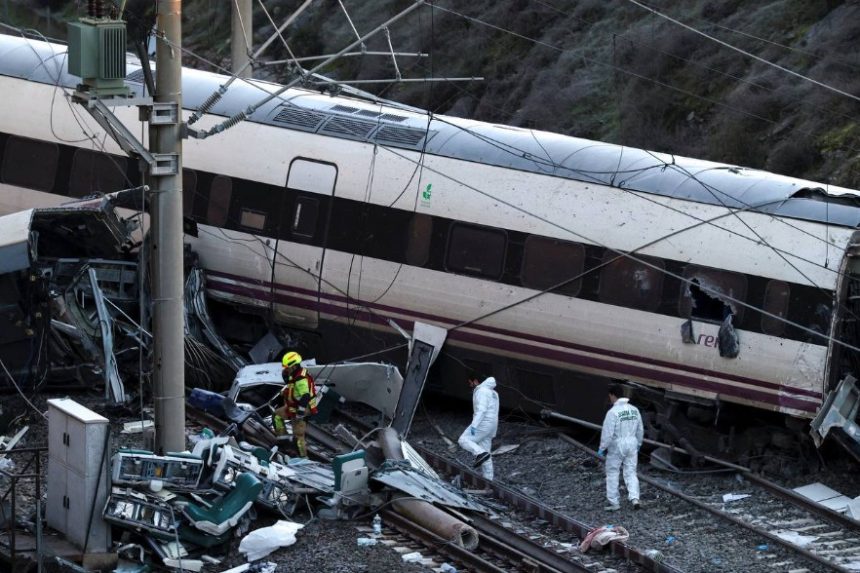
The action comes after two major train accidents in January, both of which resulted in deaths and injuries.
What happened in the January train crashes in Spain?
The strike follows two tragic incidents that have shaken public confidence in Spain’s rail system.
Adamuz crash (Southern Spain)
On 18 January, a high-speed train derailed near Adamuz, in southern Spain, before colliding with another train travelling in the opposite direction.
Authorities say the crash killed 46 people, making it Spain’s deadliest rail disaster in more than a decade.
Early findings from investigators suggest a possible fracture in the track, with evidence found on multiple trains that travelled over the same section before the crash.
Barcelona-area derailment (Catalonia)
Just two days later, another train derailed near Barcelona after a wall collapsed onto the railway line.
The accident killed a trainee driver and left at least 37 passengers injured, with many of the injured believed to have been travelling in the first carriage.
Rail officials believe the wall collapsed as the train passed, striking the driver’s cab first.
What are the striking train drivers demanding?
Semaf says the accidents represent a “turning point” and argues that Spain must take immediate steps to prevent more tragedies.
The union’s key demands include:
- Hiring more rail staff
- Increased safety guarantees
- Improved track and infrastructure maintenance
- Greater long-term investment in rail services
The union has warned that Spain’s rail system is being pushed beyond safe limits due to staff shortages and what it describes as worsening conditions across key routes.
How much disruption will the Spanish train strike cause?
The strike is expected to affect train services across the country, including:
- High-speed rail services between major cities
- Regional commuter routes used by daily workers
- Intercity services relied on by business travellers and tourists
Passengers should expect cancellations, delays, and overcrowding on services that continue to operate.
Spain’s rail disruption is likely to be especially severe in major hubs such as:
- Madrid
- Barcelona
- Seville
- Malaga
- Valencia
Many travellers may also face difficulties rebooking tickets due to high demand and limited replacement services.
Is Spain’s rail network suffering from poor maintenance?
Following the crashes, safety checks reportedly uncovered faults and maintenance issues on several routes, adding weight to concerns raised by train staff.
However, the Spanish government has pushed back against claims of underinvestment.
Officials have pointed to major spending projects, including around €700 million (£605 million) reportedly invested in updating the Madrid–Andalusia line in recent years.
Spain’s Transport Minister Óscar Puente has insisted that the country is not facing a major infrastructure failure, rejecting the idea that the network has become obsolete.
“We’re not looking at a problem of lack of maintenance, we’re not looking at a problem of obsolete infrastructure, and we’re not looking at a problem of lack of investment,” said Transport Minister Óscar Puente.
Will Spain’s Prime Minister face pressure over the rail strike?
Spain’s Prime Minister Pedro Sánchez is expected to face intense political scrutiny, with reports suggesting he will be questioned in parliament later this week over the safety failures and the public response to the crashes.
The rail strike has quickly become a political issue, with opposition figures and public commentators questioning whether the government has done enough to prevent such incidents.
Public anger has also grown due to travel disruption, particularly for workers who rely on commuter routes.
How does the Spanish train strike affect UK travellers?
Although the strike is taking place in Spain, it may affect thousands of UK tourists, particularly those travelling during winter and early spring holidays.
UK travellers planning to use Spain’s rail network should consider:
- Checking train schedules daily
- Expecting last-minute cancellations
- Allowing extra time for airport transfers and long-distance journeys
- Keeping backup travel options, such as coach routes or domestic flights
This strike could also impact UK travellers using Spain as part of wider European travel routes, especially those relying on pre-booked rail connections.