


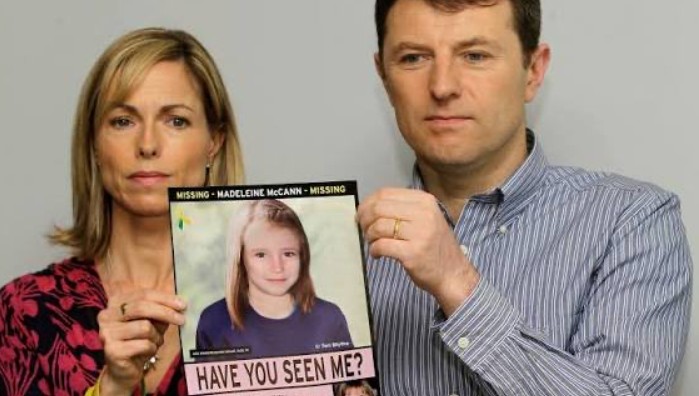
Woman, once convinced she was Madeleine McCann, outlines what led her to believe it, but DNA now tells a different story
A courtroom drama at Leicester Crown Court has shed fresh light on how a Polish public came to believe she might be the missing British child, Madeleine McCann. Her claims have now been undercut by definitive scientific findings.
In 2022, a 24- time-old Polish woman, Julia Wandelt, came forward with the assertion that she might be Madeleine McCann, the girl who disappeared in Portugal in 2007.
The exposure of Madeleine when she was three has remained unsolved for nearly two decades.
Wandelt told the court she was driven by a query about her origins and family history. She explored missing-person databases online.
She joined Facebook groups dedicated to the McCann case and said: “There were a lot of people talking about a lot of theories.”
In her testimony, she added, “My mother has natural brown hair and brown eyes. My father has dark hair… but he had dark hair and brown eyes as well.”
“I just wanted to check if there were any missing children my age. … That is how I found Madeleine.”
She also claimed her parents repeatedly refused to supply her birth certificate and that her requests for DNA tests had been rebuffed.
“It made me feel a bit surprised because I didn’t expect them to refuse, especially because at that time I still dealt with a lot of emotional problems.”
While Wandelt’s assertion may have sprung from identity confusion, the courtroom heard she is accused of serious misconduct.
Over the period between 2022 and early 2025, she allegedly bombarded the family of Madeleine McCann, her parents Kate McCann and Gerry McCann, plus siblings, with phone calls, texts, emails, and social-media messages claiming she was their daughter. She is also alleged to have visited their home, uninvited.
She and co-defendant Karen Spragg (61) deny one count of stalking. Wandelt maintains her actions were driven by trauma and confusion rather than malice. She told the court she holds “sympathy” for the McCanns.
“No, I always defended them. I still, even now, defend them. I actually have sympathy for them… even though I am in prison for eight months because they look for their child and I look for my parents.”
Detective Chief Inspector Mark Cranwell of Operation Grange told the court the McCanns were “deeply distressed” by what was described as a “creepy” and “deeply disturbing” campaign of contact.
DNA results
Crucially, a recently revealed DNA test has put the matter to rest, for the investigators at least. In the hearing, Cranwell said: “A comparison took place. It conclusively proved that Julia Wandelt is not Madeleine McCann.”
The test ruled out that Wandelt was biologically related to the McCanns, either jointly or singly.
The court heard the police opted to conduct the DNA inquiry when Wandelt was arrested in the UK on stalking charges, in part because they feared the wider consequences of someone falsely asserting to be Madeleine.
Despite prior social-media posts where Wandelt claimed to have results showing a potential 69 % “match” and linking her father to Gerry McCann, the official forensic outcome is that no biological link exists between her and the missing girl.
The original disappearance of Madeleine McCann from a holiday apartment in Praia da Luz, Portugal, in May 2007 remains one of the most high-profile missing-person investigations in recent UK history.
The case has been the subject of multiple investigations and countless leads, none conclusive.
Into this backdrop emerged Wandelt’s extraordinary claim. Whether driven by an identity crisis, psychological distress, or something else, her story became for a moment another twist in the McCann saga.
But now the legal system and forensic science have intervened: the claim is over. Wandelt remains in custody and faces trial, not as a lost child but as an alleged stalker.
For the McCann family, the hearing offers a measure of relief, one false hope extinguished.
For the courtroom and the public, this is a demonstration of how impulse, emotion, and social-media narratives can collide with real-world investigation, DNA science, and legal boundaries.
For Wandelt, the matter has shifted completely. The question is no longer “Could she be Madeleine?” but “Why did she so believe, and what next?”
Meanwhile, the disappearance of Madeleine McCann remains unresolved. Her case continues, while this chapter draws to a close.